
Can raw dog food cause an upset stomach?
Yes, raw dog food can cause an upset stomach, including diarrhoea, vomiting and discomfort, particularly after a sudden diet change or when food contains harmful bacteria. However, symptoms after a raw meal do not prove that the food caused them: infections, scavenging and other illnesses also cause digestive problems. Do not dismiss vomiting or diarrhoea as a normal raw-food “detox”; check your dog’s condition and seek veterinary advice when symptoms persist or your dog seems unwell.
- Can raw dog food cause an upset stomach? Yes: sudden diet changes, unsuitable meals and bacterial contamination are possible causes.
- Repeated vomiting, bloody diarrhoea or marked lethargy need prompt veterinary advice, not another food experiment.
- Raw Direct suits owners comparing raw dog food brands; a retailer cannot diagnose a sensitive stomach.
- Check meal changes, storage and handling before blaming a particular protein or buying a replacement box.
Why this matters
Your next step depends on how your dog feels, not simply on whether dinner was raw. A dog with a slightly softer stool and normal behaviour needs a different response from a dog that is vomiting repeatedly, refusing water or showing pain.
If you are changing diets in 2026, read about how long dogs take to adjust to raw food, but do not use a transition timetable to explain away illness. A diet change is a possible explanation, not a diagnosis. Keep the packaging and note what your dog ate so your vet has useful information.
Can raw dog food cause an upset stomach?
Yes. Raw food can upset a dog’s stomach through a sudden change in ingredients, a meal that does not suit the dog, or exposure to disease-causing bacteria. Raw meat is not sterile, and freezing does not reliably eliminate all harmful organisms.
The timing gives you a clue, but it does not settle the cause. Your dog might also have eaten rubbish, picked up an infection or developed a problem unrelated to dinner.
| What you notice | What it tells you | Best next step | Important limitation |
|---|---|---|---|
| A softer stool after changing meals, with otherwise normal behaviour | The change deserves attention | Record meals and symptoms; avoid introducing more new foods | Normal behaviour does not rule out illness |
| Loose stools after adding treats or larger portions | The whole feeding routine needs checking | Review portions, extras and recent changes | You cannot identify the cause from stool appearance alone |
| Vomiting or diarrhoea after a storage or handling problem | Food safety needs investigating | Stop using the suspect batch and contact your vet | Smell and appearance cannot confirm food safety |
| Repeated vomiting, blood, pain or marked lethargy | The dog needs medical assessment | Contact your vet promptly | Switching brands is not treatment |
The safest decision comes from your dog’s symptoms and history, not from the claim that raw feeding should always improve digestion. Smaller stools, a familiar brand or an enthusiastic appetite do not establish that a diet is suitable.
Why stomach reactions vary between dogs
Different dogs react differently to the same feeding change. That does not make every reaction an allergy, and it does not make every raw meal unsafe. Check these factors before deciding what to change:
- Speed of change: suddenly replacing a familiar diet changes what the digestive system has to process. Gradual changes are generally better tolerated, but they do not prevent contamination or make an unsuitable diet suitable.
- Portion size: overfeeding can contribute to digestive upset. Include treats, chews and table scraps when reviewing what your dog actually ate.
- Meal composition: fat content, ingredients and added extras differ between recipes. A dog’s tolerance of one recipe does not establish tolerance of every food using the same main meat.
- Individual sensitivity: adverse food reactions exist, but vomiting or diarrhoea alone does not identify the ingredient responsible. Diagnosis needs a structured veterinary approach.
- Storage and handling: raw meat can carry harmful bacteria. Poor temperature control and cross-contamination add risks for both dogs and people.
- Underlying health: digestive disease and other illnesses can cause the same signs as a food reaction. Puppies, elderly dogs and dogs with existing conditions need particular care.
For a feeding review in 2026, compare the actual ingredient list and feeding instructions rather than relying on the flavour name. “Chicken”, for example, is not a complete description of a recipe’s composition or nutritional suitability.
What should you do if your dog becomes unwell after raw food?
Check the dog before checking the shopping basket. Your first job is to establish whether your dog needs veterinary help; finding a different flavour comes later.
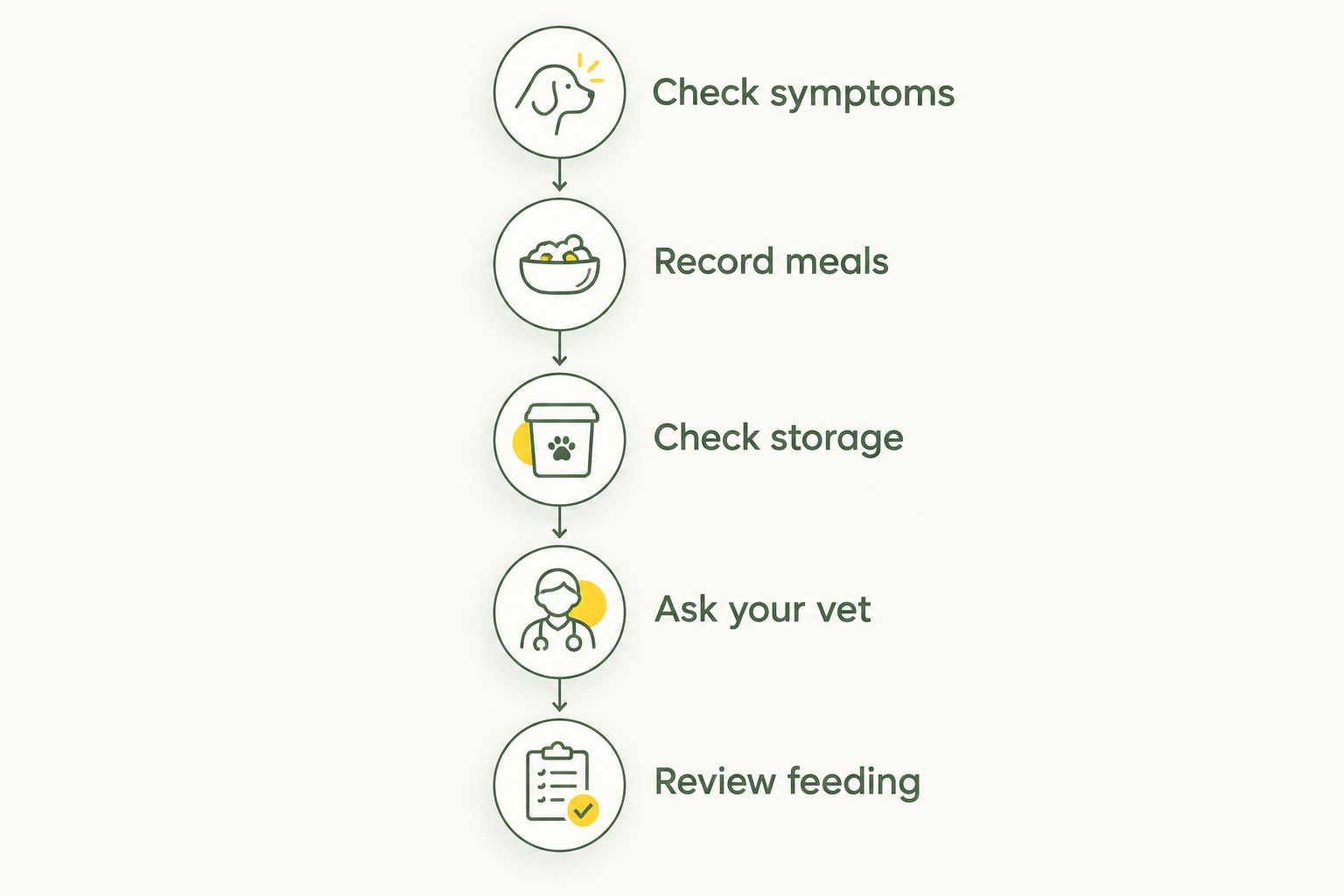
- Check symptoms. Look at your dog’s behaviour, vomiting, stools, drinking and signs of discomfort. Contact your vet promptly for repeated vomiting, bloody diarrhoea, marked lethargy or abdominal pain. Retching without bringing anything up, especially with a swollen abdomen, is an emergency.
- Record meals. Write down the recipe, portion, treats, supplements and anything your dog might have scavenged. Note when the symptoms started and keep the packaging, batch details and purchase information.
- Check storage. Review how the food arrived, where you stored it and how you thawed it. Stop using food you suspect has been mishandled; do not feed it again to see whether the symptoms recur.
- Ask your vet. Explain your dog’s age, existing conditions, medication and whether other pets are affected. Ask for advice on feeding and hydration rather than automatically fasting your dog or trying human medicines.
- Review feeding. Once immediate illness has been addressed, review the diet with your vet. Make agreed changes in a controlled way so you can understand what your dog tolerates.
This sequence separates urgent care from longer-term feeding decisions. It also gives your vet a clearer history than a list of several new foods tried after the symptoms began.
Do not give human anti-diarrhoea medicines, painkillers or leftover antibiotics without veterinary instructions. Keep fresh water accessible, but seek prompt help if your dog cannot keep water down or you suspect dehydration. A home feeding adjustment is not a substitute for assessment when your dog is clearly unwell.
How should you store and handle raw dog food?
For your 2026 kitchen routine, follow the Food Standards Agency’s general temperature advice: keep your fridge at 5°C or below and your freezer around -18°C. Follow the product’s own storage and thawing instructions as well. Those temperatures help control storage conditions; they do not sterilise raw meat.
Thaw food in a covered, leakproof container in the fridge rather than on the worktop. Keep it separate from foods people will eat without cooking, and clean any surfaces touched by raw juices. Use dedicated utensils where practical and wash your dog’s feeding bowl after use.
Wash your hands with soap and water for at least 20 seconds, following NHS handwashing guidance, after handling raw food, dirty bowls or dog waste. Children should not handle raw meals. Take particular care in households with pregnant people, older people or anyone with a weakened immune system.
Do not judge safety by smell alone. Food can contain harmful bacteria without an obvious change in appearance, and a dog that seems healthy can still spread bacteria through its waste. The British Veterinary Association highlights these animal and household risks in its guidance on raw feeding.
A useful handling checklist is:
- Keep frozen food frozen until you need to thaw it.
- Follow the label rather than applying a generic storage timetable.
- Contain raw juices during thawing and preparation.
- Clean bowls, utensils and preparation surfaces after use.
- Pick up dog waste promptly and wash your hands afterwards.
Good hygiene reduces risk; it does not remove every risk associated with raw feeding. That distinction matters when deciding whether raw food suits your household.
How do you choose the next meal without guessing?
After veterinary advice, choose a feeding plan you can follow consistently. Changing the main food, treats, portion size and supplements together makes the pattern harder to interpret. Keep a simple diary of the agreed diet, appetite, stools and any recurring symptoms.
A complete food and a complementary food serve different purposes. Check the label for nutritional adequacy and the intended life stage; a meat percentage or an ingredient list alone does not establish that a meal meets all your dog’s needs. Puppies need food appropriate for growth, not simply smaller portions of any adult recipe.
If your vet recommends investigating an adverse food reaction, follow the prescribed diet strictly. A chicken-free mixed box is not automatically an elimination diet: other ingredients, previous exposure and manufacturing considerations also matter. Treats and flavoured supplements can interfere with a food trial.
For a 2026 feeding plan, use these practical comparisons:
| Feeding approach | Best for | Advantage | Trade-off |
|---|---|---|---|
| Consistent, nutritionally appropriate meals | Dogs following an agreed everyday feeding plan | Makes intake and tolerance easier to track | Consistency alone does not treat underlying illness |
| Frequent flavour changes | Owners seeking variety once tolerance is established | Offers different meal choices | Several changes make reactions harder to investigate |
| Veterinary-directed diet trial | Dogs being assessed for an adverse food reaction | Provides a structured way to investigate food involvement | Requires strict control of meals, treats and extras |
Choose consistency during an investigation, not variety for its own sake. Do not assume that a novel protein, a chicken-free label or a raw format makes a food appropriate for a sick dog.
Where does buying raw food fit into the decision?
Raw Direct offers free next-day UK delivery and sells raw dog food from multiple brands. That helps with arranging meals and comparing options, but delivery convenience does not establish digestive suitability.
Raw Direct is best for dog owners comparing raw dog food across brands, not for diagnosing an upset stomach. Its role is retail choice; your vet’s role is assessing symptoms and advising on a suitable feeding plan. Check the full label before ordering, especially when your dog needs a specific diet.
Is diarrhoea after starting raw food normal?
Diarrhoea after starting raw food is not something to accept as an inevitable adjustment. A sudden diet change can contribute, but infection, food intolerance and unrelated illness are also possible explanations. Contact your vet if diarrhoea persists, worsens or comes with other signs of illness.
Do not call it “detox”. That explanation can delay appropriate care and encourages you to keep feeding through symptoms without checking the cause.
Should you switch to chicken-free raw food straight away?
Switching to chicken-free raw food straight away does not diagnose or treat the cause of an upset stomach. Chicken is not automatically responsible just because it was present in the meal. Discuss recurring symptoms with your vet before excluding ingredients or beginning a diet trial.
A replacement recipe can introduce several new ingredients at once. That makes it harder to understand the reaction rather than giving you a clear answer.
Should you stop raw feeding if your dog keeps being sick?
Repeated sickness needs veterinary advice, not continued feeding experiments. Stop using a suspect batch and ask your vet what to feed while your dog is assessed. The right recommendation depends on the symptoms, your dog’s health and the suspected cause.
Do not deliberately reintroduce a food that appeared to cause significant illness to prove the connection. Your dog’s welfare comes before confirming a theory at home.
FAQ
Can raw dog food cause an upset stomach even if my dog has eaten it before?
Yes, previous tolerance does not rule out a later upset stomach. A different recipe, portion change, contaminated food or unrelated illness can cause new symptoms.
How can I tell whether raw food caused my dog’s diarrhoea?
You cannot confirm the cause from timing or stool appearance alone. Record the meals, symptoms and storage history, and contact your vet if symptoms persist or your dog seems unwell.
Is vomiting after a raw meal just part of the transition?
Vomiting should not automatically be treated as part of a raw-food transition. Repeated vomiting, pain, marked lethargy or an inability to keep water down need prompt veterinary advice.
Is chicken-free raw food better for every sensitive stomach?
No, chicken-free raw food is not better for every dog with digestive symptoms. An adverse food reaction needs a structured assessment, and removing chicken does not address every possible cause.
Does freezing raw dog food kill all the bacteria?
No, freezing does not reliably kill all harmful bacteria in raw dog food. Follow storage instructions and use careful handling, cleaning and handwashing even when food arrives frozen.
Can I mix raw food and kibble if my dog has an upset stomach?
Do not introduce a new mixture as a treatment for an upset stomach. Ask your vet what to feed, particularly if your dog is vomiting or has recurring diarrhoea.
Can Raw Direct tell me which food will cure my dog’s stomach problem?
Raw Direct is a raw dog food retailer, not a veterinary diagnostic service. No product choice should be treated as a cure without identifying the cause of your dog’s symptoms.
One last thing
Before your next raw-food order in 2026, photograph the current pack’s ingredient list and batch details. Keep those alongside your feeding diary. If symptoms recur, that record gives your vet something specific to assess instead of relying on a remembered flavour name.
A useful feeding diary records everything your dog eats, not just what goes in the bowl. Chews, training rewards, table scraps and scavenged food all belong in the record.