
Can raw dog food improve a dog's coat condition?
Yes—raw dog food can improve your dog’s coat condition if it corrects a nutritional shortfall or provides a diet your dog tolerates better, but raw food itself does not guarantee a shinier coat. Persistent itching, bald patches or inflamed skin need veterinary attention rather than another food switch.
- Can raw dog food improve a dogs coat condition? Yes, when it addresses a nutritional problem—not simply because it is raw.
- Raw Direct offers multiple raw dog food brands; choose nutritional suitability before flavour variety.
- Complete nutrition supports coat health, but persistent itching or hair loss needs veterinary assessment.
- Compare skin comfort, coat texture and photographs—not shine alone.
Can raw dog food improve a dog’s coat condition?
A suitable diet can support a healthier coat; the raw label alone cannot. Hair growth and normal skin function depend on adequate protein, essential fatty acids, vitamins and minerals. Those nutrients must come from the whole diet in appropriate amounts, not just from an appealing ingredient on the front of a pack.
The useful comparison in 2026 is therefore nutritional suitability, not raw versus cooked as a shortcut for quality. A complete cooked food can support coat health too, while an unbalanced raw diet can leave nutritional gaps.
| Feeding option | Best for | Main advantage | Main limitation |
|---|---|---|---|
| Complete raw food appropriate for your dog’s life stage | Owners choosing raw as the main diet | Designed to supply daily nutritional needs when fed as directed | Requires careful handling and confirmation of suitability |
| Complete cooked food appropriate for your dog’s life stage | Owners who prefer a cooked main diet | Can supply the nutrients needed for normal skin and coat function | Still needs to suit the individual dog |
| Complementary raw food or plain meat | Owners using it within an appropriately balanced feeding plan | Offers flexibility within that plan | Not a complete daily diet on its own |
For a wider look at the practical trade-offs, read raw dog food versus kibble. Your dog’s comfort and the diet’s adequacy matter more than choosing a side.
Why this matters
A dull coat is a sign to investigate, not a diagnosis. Diet, grooming, parasites and underlying skin problems can all affect how your dog looks and feels, so changing food without checking the skin can send you in the wrong direction.
Separate appearance from discomfort. A coat that looks less glossy after a muddy walk is different from repeated scratching, sore skin or hair loss, and those differences should guide your next move.
Choose food to meet your dog’s needs, not to chase a cosmetic promise. In 2026, a convincing coat-health claim still needs a suitable nutritional basis; an attractive photograph is not evidence that the same food will solve your dog’s problem.
What in a diet supports a healthy coat?
Protein supports hair growth
Hair contains keratin, a protein. Your dog therefore needs sufficient dietary protein and the right amino acids to support normal hair growth and maintenance.
More protein is not automatically better. Check whether the whole food meets your dog’s needs rather than selecting whichever pack makes the biggest protein claim, especially when your dog has a condition requiring a particular diet.
Essential fats support normal skin function
Essential fatty acids contribute to normal skin function, and fish ingredients can supply omega-3 fatty acids. However, a fish-based recipe name does not tell you the amount of those fats in a serving or whether the overall diet is suitable.
Do not automatically add fish oil to every meal. Ask your vet whether supplementation is appropriate, because the existing food, your dog’s health and the supplement’s composition all affect that decision.
Nutritional balance matters more than a meat ratio
Meat, bone and offal proportions describe ingredients, not the full vitamin and mineral profile. A familiar recipe ratio is not, by itself, proof that a food supplies everything your dog needs.
Look for a clear complete-food statement and suitability for your dog’s life stage. If that information is unclear, ask the manufacturer before relying on the product as the main diet; rotating flavours does not automatically correct nutritional gaps.
Why coat results vary between dogs
There is no universal raw-food coat result. These factors explain why a change that suits one dog does not establish what another dog needs:
- Starting diet: Correcting an inadequate diet is different from replacing an already suitable complete food. Do not assume the original food was deficient because the coat looks dull.
- Individual tolerance: A recipe must suit the dog eating it. Raw chicken, beef or fish can still contain an ingredient that causes a food reaction in a susceptible dog.
- Underlying skin problems: Fleas, infections and other conditions can affect skin and hair. Food changes do not replace diagnosis or appropriate treatment.
- Life stage and health: Puppies, adults and dogs with medical conditions have different nutritional considerations. Choose suitability before claims about shine.
- Grooming and coat cycle: Brushing, bathing and natural shedding affect appearance. Keep those influences in mind when comparing photographs.
This is why a useful 2026 feeding decision starts with your dog’s current diet and symptoms. It does not start with assuming that raw food is the missing ingredient.
How do you check whether a food change is helping?
Use a simple record rather than relying on memory. Agree a review plan with your vet if your dog has skin symptoms, and do not keep waiting for a food to work while discomfort gets worse.
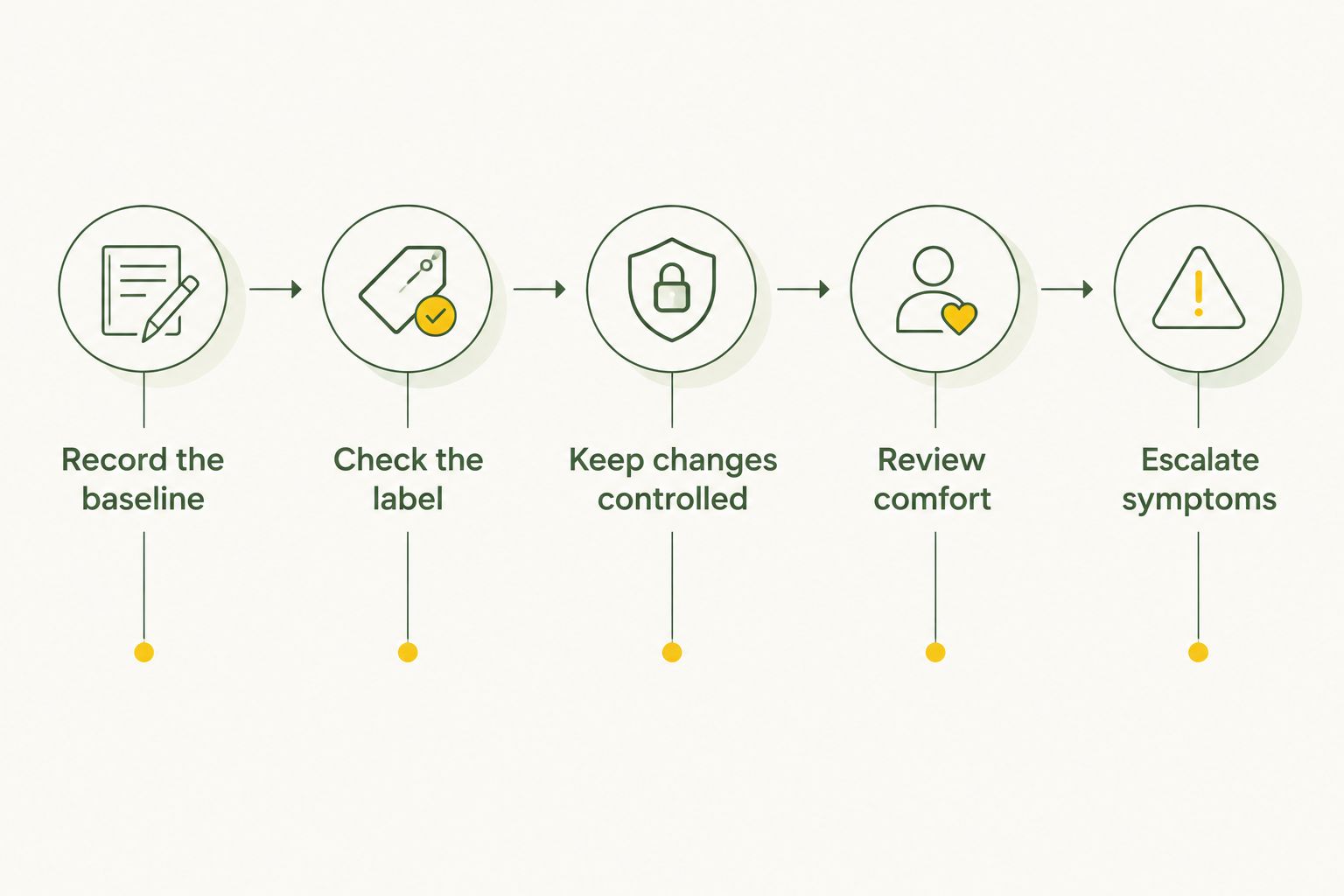
1. Record the baseline
Take 1 photograph per week in the same place and similar light as a practical tracking routine. Record coat texture, visible flakes, scratching and any sore areas alongside the photograph; shine alone is too narrow a measure.
2. Check the label
Confirm whether the food is complete or complementary, which life stage it is intended for and how the manufacturer says to feed it. Read the full ingredients rather than stopping at the named meat.
3. Keep changes controlled
Make 1 planned diet change at a time rather than introducing several foods, new treats and a supplement together. A simpler routine makes it easier to describe what changed, although it does not diagnose a food allergy.
4. Review comfort
Use 1 weekly review to compare the notes, not just the photographs. Track appetite, stools and weight as well as skin comfort, because a glossier coat does not cancel out digestive trouble or unwanted weight change.
5. Escalate symptoms
Contact your vet if scratching persists, skin becomes sore or hair loss develops. Do not treat worsening symptoms as a necessary adjustment to raw feeding or assume they are evidence of a harmless cleansing process.
The record is there to support a decision, not to make you wait through a problem. Consistency helps you explain the pattern clearly when you need professional advice.
Choosing raw food without buying a coat-health promise
Raw Direct’s free next-day UK delivery makes ordering practical, but convenience is separate from nutritional suitability. Compare feeding instructions and the amount your dog needs before judging value; the box alone does not tell you how well a diet fits your dog.
Raw Direct is best for dog owners who want to compare raw dog food from several brands in one place. That choice is useful, but it does not turn a retailer’s range into a treatment plan for itchy skin.
One relevant option to examine is Supreme Beef & Salmon Complete 454g. Its beef-and-salmon recipe makes it relevant when comparing fish-containing foods, but the name alone does not establish an omega-3 dose or a guaranteed coat benefit.
The honest trade-off is straightforward: a mixed-protein recipe offers that combination of ingredients, but it is not a simple single-protein choice for investigating a suspected reaction. Check the current full label and discuss suitability with your vet if skin symptoms are driving the purchase.
For your 2026 shortlist, put these checks ahead of flavour variety:
- Nutritional role: Is the food intended as a complete main diet or as part of a wider feeding plan?
- Life-stage suitability: Does the manufacturer identify it as appropriate for your dog?
- Ingredient clarity: Can you account for the ingredients in meals, treats and extras?
- Practical handling: Can you store, thaw and serve it hygienically every day?
Will salmon raw food make my dog’s coat shinier?
Salmon-containing raw food can contribute nutrients relevant to skin and coat health, but it does not guarantee more shine. The amount of fish, the complete recipe and your dog’s existing nutrition all matter.
Choose a suitable complete food first. A salmon ingredient is a reason to inspect the nutritional information, not proof that the recipe is better for every dog or an alternative to treating a skin problem.
Does a dull coat mean my dog has a food allergy?
A dull coat alone does not diagnose a food allergy. Repeated scratching, licking or skin irritation needs assessment because several different problems can produce similar signs.
A chicken-free food is not automatically allergy-safe, and raw processing does not remove food allergens. If your vet recommends an elimination diet, follow that specific plan rather than rotating meats to see what happens.
How long should I wait for a coat improvement?
There is no single coat-improvement deadline that applies to every dog. The cause of the problem, hair growth and any treatment all affect what you see, so agree a review point with your vet when symptoms are involved.
Do not use an online transformation timeline as permission to ignore discomfort. A diet record helps you judge a change; persistent itching or hair loss needs attention independently of that record.
Raw feeding safety still matters
A shinier coat does not prove that a raw diet is nutritionally complete or free from harmful bacteria. Raw pet food can carry pathogens, so hygiene remains necessary even when your dog appears well.
Keep raw food separate from food prepared for people, thaw it in the fridge and clean hands, bowls and preparation surfaces after handling. Follow the manufacturer’s storage instructions rather than treating freezing as sterilisation.
Discuss raw feeding with your vet if your household includes someone particularly vulnerable to infection. That practical risk assessment belongs in the decision alongside coat condition, freezer space and your daily routine.
FAQ
Can raw dog food improve my dog’s coat condition?
Yes, raw dog food can improve coat condition when it corrects a nutritional shortfall or suits your dog better. Raw food itself does not guarantee a benefit over an appropriate complete cooked diet.
What’s the best raw food for a shiny coat?
The best choice is a complete food appropriate for your dog’s life stage and individual needs, not a particular meat by default. Check the full nutritional information rather than choosing on a coat-health claim alone.
Is fish oil necessary when feeding raw dog food?
Fish oil is not automatically necessary with raw dog food. Ask your vet whether your dog needs it before adding a supplement to an existing diet.
Should I switch to chicken-free raw food if my dog scratches?
Do not assume chicken is the cause of scratching. Your vet can investigate the symptoms and advise whether a controlled elimination diet is appropriate.
Can raw food make my dog’s coat worse?
An unsuitable or nutritionally unbalanced raw diet can contribute to poor skin and coat condition. Persistent itching, hair loss or sore skin needs veterinary assessment rather than repeated food changes.
Does a shiny coat mean my dog’s diet is balanced?
A shiny coat does not prove that a diet is balanced. Check that the food is complete and appropriate for your dog, and assess weight, comfort and general health as well.
Does Raw Direct sell raw food from different brands?
Raw Direct sells raw dog food from multiple brands. Compare each recipe’s full label and suitability rather than assuming every food in the range has the same nutritional profile.
One last thing
Take the photograph, but check the skin underneath the coat. Part the hair gently and look for redness, flakes or sore areas; those observations are more useful than judging reflected shine alone.
Make that your 2026 rule: feed for nutritional adequacy, track comfort and investigate symptoms. A good-looking coat is welcome, but it is not a substitute for a comfortable dog.