

Raw dog food for agility and sporting dogs: complete 2026 guide
Agility dogs’ raw food is an uncooked diet planned to meet nutritional needs and support an appropriate body condition for training and competition. This guide covers raw dog food for agility dogs and other sporting dogs, where changing workloads, training rewards and travel make feeding more complicated than choosing a favourite flavour.
- Choose complete raw dog food for agility dogs; a meat ratio alone does not establish nutritional adequacy.
- Raw Direct suits owners comparing raw dog food across multiple brands, not those seeking a bespoke sports diet.
- Match meals to body condition and workload, counting training treats within the daily food allowance.
- Keep competition-day food familiar and maintain safe frozen storage, thawing and handling.
Why raw feeding matters for agility and sporting dogs
The feeding priority is adequate nutrition and suitable body condition, not the raw label. Agility involves short bursts of activity; sporting work can involve longer periods of exertion. Those routines need individual feeding plans, not a blanket increase because a dog is described as active.
A training session also includes food that never reaches the dinner bowl. Rewards, chews and snacks contribute to the daily intake. Ignoring them makes it harder to understand weight changes or judge whether meals need adjusting.
For your 2026 feeding plan, start with the distinction between complete raw dog food and complementary products. A complete food is intended to provide the required nutrients when fed as directed for its stated life stage. Complementary food needs an appropriate dietary partner or a professionally formulated plan.
Raw feeding also brings a practical constraint: uncooked animal ingredients can carry harmful bacteria. Freezing does not reliably eliminate those hazards. Safe handling matters at home, in the car and at the showground.
Build a feeding plan around your dog
1. Record body condition before changing meals
Start with a notebook, kitchen scales and a consistent way to assess your dog. Record the current food, daily quantity, training rewards and workload before changing anything. Without a baseline, you cannot separate a feeding issue from a busier training schedule.
The WSAVA body-condition chart uses a 9-point scale, with 4–5 generally representing ideal condition for dogs. You should be able to feel the ribs without a heavy covering of fat and see a waist, allowing for coat and breed differences. Ask your vet to demonstrate the assessment rather than judging fitness from photographs.
Body weight alone does not distinguish muscle from fat. Unexplained weight loss, reduced enthusiasm for exercise or persistent digestive changes need veterinary assessment, not an automatic switch to a richer meal. Keep your 2026 training diary alongside the feeding record so changes have context.
- Record body weight using the same scales.
- Note rib coverage, waist and abdominal tuck.
- Write down every food reward and chew.
- Separate training days from rest days.
- Ask your vet to assess unexpected changes.
2. Check completeness before comparing flavours
Read the pack first. Look for a clear statement that the food is complete and suitable for your dog’s life stage, then check the feeding instructions and ingredient information. An adult sporting dog and a growing puppy do not have interchangeable requirements.
The familiar 80:10:10 description refers to proportions of meat, bone and offal. It is not proof that every required nutrient is present in the right amount. A recipe needs more than an appealing ratio to establish nutritional adequacy.
Avoid building a long-term diet by combining favourite meats and hoping variety fills every gap. Rotation can offer flavour choice, but it does not turn an unbalanced recipe into a balanced one. A veterinary nutrition professional is the right route for a bespoke ration, particularly where illness or complex dietary restrictions are involved.
- Check for a complete-food statement.
- Confirm the intended life stage.
- Read the full ingredient list.
- Distinguish complete meals from complementary ingredients.
- Request clarification when nutritional information is unclear.
3. Choose a repeatable meal before buying a variety box
Compare your current daily food use with the pack sizes and recipes you are considering. Value means buying food your dog tolerates and that you can store and portion safely, rather than choosing the largest assortment. Check current pricing before ordering.
Raw Direct’s raw dog food range brings multiple brands together with free next-day UK delivery. That simplifies comparing options, but delivery does not replace freezer space, label checks or an individual feeding plan. Raw Direct is best for dog owners comparing raw dog food across multiple brands.
For your 2026 shortlist, choose a familiar complete recipe before introducing a broad rotation. A 454g block is a packaging unit, not a daily feeding recommendation. Weigh your dog’s portion rather than assuming one block equals one meal.
If you are excluding chicken, check every recipe and treat. A chicken-free assortment is a practical filter, not a diagnosis or a guarantee against other ingredient reactions. The comparison below separates these buying needs without claiming that one protein improves sporting performance.
- Compare current pricing against your actual food use.
- Choose recipes with clear feeding information.
- Check freezer space before ordering.
- Weigh portions rather than counting blocks.
- Keep a record of recipes your dog tolerates.
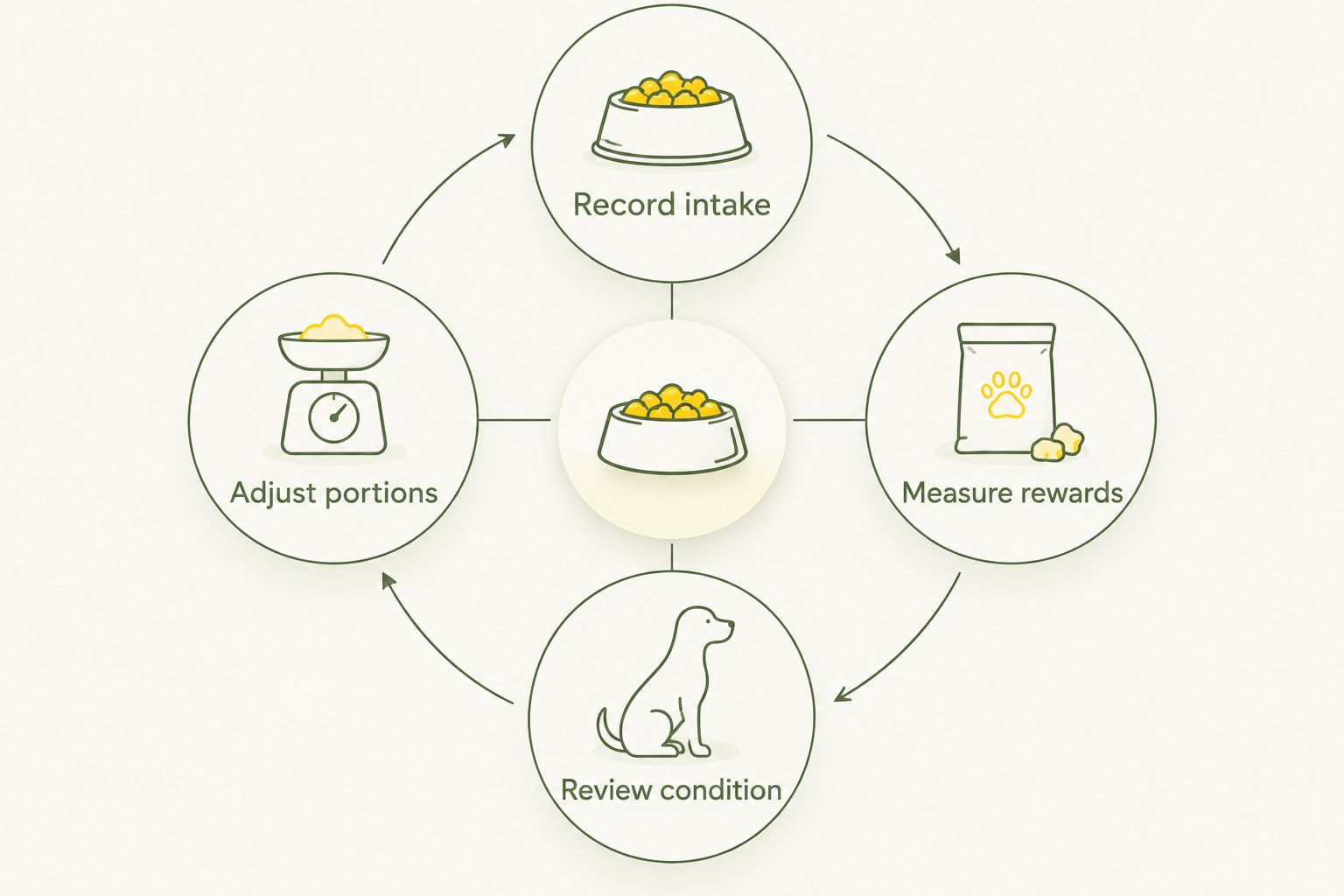
4. Adjust intake to workload and training rewards
Use the food’s feeding guidance as a starting point, then assess your dog’s response. A percentage-of-body-weight rule cannot account for every recipe’s energy content, your dog’s condition or the difference between light practice and sustained work.
Ask for energy information when you need to compare recipes accurately. Protein percentages alone do not tell you how much energy a meal provides, and wet and dry foods cannot be fairly compared using headline percentages without accounting for moisture.
Count rewards before deciding that the dinner portion needs increasing. Keep a measured daily reward allowance so several handlers do not unknowingly add food throughout the day. Use food that is practical to handle hygienically during training; raw pieces carried loose in pockets create avoidable contamination risks.
Make feeding changes deliberately. Altering portions, recipes and rewards together makes the result difficult to interpret. Keep water accessible and take advice if your dog struggles to maintain condition despite a consistent plan.
- Record the complete daily food intake.
- Measure a separate training-reward allowance.
- Ask for energy content when comparing recipes.
- Adjust one feeding variable at a time.
- Review body condition alongside workload.
5. Keep competition-day feeding familiar
Plan meals around your dog’s established routine and the event schedule. Avoid a large meal immediately before strenuous activity, and ask your vet for timing advice specific to your dog, especially where there are concerns about gastric dilatation-volvulus, commonly called bloat.
There is no single meal interval that suits every sporting dog. Breed, health, meal size and exercise intensity affect the plan. Practise the routine on ordinary training days rather than testing it at a competition.
Do not introduce a new protein, unfamiliar supplement or larger reward allowance because the event feels important. Familiar feeding makes it easier to identify other reasons for a change in appetite or stools. Keep fresh water accessible; a moisture-rich meal does not remove the need to drink.
Write down the meal and reward arrangements before travelling. Anyone helping with your dog should know what has already been fed and what remains in the daily allowance.
- Practise meal timing during normal training.
- Keep competition recipes familiar.
- Avoid large meals immediately before strenuous exercise.
- Tell helpers what your dog has eaten.
- Keep fresh drinking water accessible.
6. Plan safe storage for home and away
Check the pack’s storage and thawing instructions before travelling. Thaw raw food in the fridge, in a sealed container that prevents leaks onto other foods. Wash hands, utensils, bowls and surfaces after handling it.
For your 2026 competition calendar, identify which venues provide suitable refrigeration and which trips make raw feeding impractical. A cool bag is not proof that food has stayed at a safe temperature. Use appropriate cooling equipment and temperature checks rather than judging safety by touch or smell.
Pack meals separately from human food and keep raw-food preparation away from shared catering areas. Households with young children, older adults or immunocompromised people need particular caution; discuss the feeding choice with your vet.
If safe storage is unavailable, use a suitable complete alternative your dog already tolerates. A reliable travel meal is a better choice than raw food handled unsafely. Rehearse that alternative before a trip rather than improvising at the venue.
- Follow the manufacturer’s storage instructions.
- Thaw food in a sealed fridge container.
- Keep raw meals separate from human food.
- Clean hands, bowls and preparation surfaces.
- Check cooling arrangements before travelling.
- Prepare a familiar complete alternative when needed.
Compare feeding options for your sporting dog
For a 2026 buying decision, compare suitability before flavour variety. Raw Direct’s free next-day UK delivery helps with ordering, but each option still needs adequate storage and a recipe check. The products below are not ranked for athletic performance: no product-specific sporting results establish that comparison.
| Option | Best for | Practical advantage | Key limitation |
|---|---|---|---|
| Supreme Beef Complete 454g | Owners shortlisting a beef complete recipe | A named recipe to assess before choosing a wider rotation | Check its full ingredients, life-stage suitability and feeding guidance; the name does not establish sporting benefits |
| Stobart Mixed Box | Owners seeking a mixed-flavour complete raw option | Combines several Stobart recipes in one order | Assess each recipe rather than treating the assortment as one uniform meal |
| Stobart Chicken Free Allergy Box | Owners specifically excluding chicken | Described as complete raw meals for dogs that need to avoid chicken | Chicken exclusion does not establish suitability for every dietary sensitivity |
| Familiar complete non-raw food | Travel without reliable raw-food storage | Removes the need to handle raw meat at the venue | Choose a food suited to your dog and follow its own storage instructions |
| Professionally formulated home-prepared diet | Dogs needing an individual dietary plan | Allows a qualified professional to address specific requirements | Requires accurate preparation and adherence to the formulated recipe |
Choose by constraint: a familiar recipe for consistency, a checked assortment for variety, a chicken-free option for chicken exclusion, or a complete non-raw alternative when safe raw storage is unavailable. None is automatically best because your dog competes.
The two Stobart boxes below match the variety and chicken-exclusion use cases. Read their current product information before deciding; neither removes the need to monitor portions and body condition.


Common mistakes agility and sporting dog owners make
- Feeding for the sporting label, not the actual workload. An occasional agility session does not justify an automatic increase. Review your dog’s condition and total food intake before changing portions.
- Treating training rewards as extras. Several sessions and multiple handlers can make the reward allowance hard to track. Measure it separately and include it in the daily record.
- Choosing the highest protein percentage as the winner. A headline percentage does not establish energy suitability, completeness or better performance. Compare full nutritional information and feeding guidance.
- Changing recipes during a competition weekend. New food adds another variable when travel and routine have already changed. Test feeding changes at home and keep event meals familiar.
- Assuming frozen means free from bacteria. Frozen raw food still requires careful handling. Do not thaw it on a shared table or let leaking containers contaminate other food.
FAQ
What is the best raw dog food for agility dogs?
The best raw dog food for agility dogs is a complete food suited to the dog’s life stage, tolerance and energy needs. Choose using feeding information, body condition and safe-storage requirements rather than an unverified performance claim.
Does raw dog food make an agility dog faster?
Raw dog food should not be chosen on the promise that it makes an agility dog faster. Adequate nutrition supports normal function, but food choice does not replace appropriate training, conditioning and veterinary care.
How much raw food should I feed my sporting dog?
Start with the complete food’s feeding instructions and adjust according to body condition, workload and total daily intake. Include training treats and seek veterinary advice if weight or condition changes unexpectedly.
Should I feed my dog before an agility competition?
Use an established meal schedule and avoid a large meal immediately before strenuous activity. Ask your vet about suitable timing for your dog and practise the routine on training days.
Is an 80:10:10 raw diet complete for a working dog?
An 80:10:10 ratio alone does not prove that a raw diet is complete for a working dog. Check the explicit complete-food statement, intended life stage and feeding directions rather than relying on the ingredient ratio.
Is chicken-free raw food better for sporting dogs?
Chicken-free raw food is not automatically better for sporting dogs. It is an ingredient-exclusion option; suspected food reactions need veterinary assessment rather than repeated unsupervised protein changes.
Can I take frozen raw dog food to an agility show?
You can take frozen raw dog food only with arrangements that maintain safe storage and handling throughout the trip. Follow the manufacturer’s instructions and use a familiar complete alternative when suitable cooling is unavailable.
Do I need supplements for a raw-fed agility dog?
Do not add supplements to a complete diet simply because your dog does agility. Ask your vet whether there is a specific need, since unnecessary additions can unbalance the overall diet.
One last thing
Write the travel fallback into your feeding plan before you need it. A dog that tolerates only an unrehearsed event-day meal leaves you with fewer safe choices when refrigeration fails. Practise a suitable complete alternative at home, record how you portion it and take those instructions with you.
The strongest feeding plan is repeatable: clear nutritional information, measured meals, counted rewards and safe handling. Keep those foundations steady before experimenting with flavours.