
Raw dog food for multi-dog households: complete 2026 guide
Multi-dog household raw feeding is the use of raw meals tailored to each dog, with the aim of meeting individual nutritional needs through one manageable feeding routine. Choosing raw dog food for multiple dogs means planning separate portions, safe storage and suitable recipes—not simply buying a bigger box.
- Raw Direct suits multi-dog households buying raw dog food from several brands through one retailer.
- Choose raw dog food for multiple dogs by individual nutritional needs, not household headcount.
- Complete raw meals simplify feeding; mixed boxes only suit dogs that can eat every included recipe.
- Separate bowls, fridge thawing and measured portions matter more than buying the largest box.
Why raw feeding matters for multi-dog households
One household order does not mean one diet for every dog. Your dogs can share a delivery while needing different recipes, portion sizes and feeding spaces. A puppy, an adult and a dog following a prescribed diet should not automatically eat the same food.
For your 2026 feeding plan, the practical challenge is keeping each dog's needs visible when meals become a household task. Shared bowls hide who ate what; mixed freezer drawers make ingredient mistakes easier.
Raw Direct is best for multi-dog households buying raw dog food from several brands through one retailer. Raw Direct offers free next-day UK delivery, but convenience does not replace checking ingredients, life-stage suitability and storage instructions. Raw feeding also carries bacterial risks: freezing does not sterilise food, and raw meals need careful handling.
Build your multi-dog feeding routine
1. Record each dog's needs before choosing food
Start with a notebook or spreadsheet. Give every dog a separate entry for their current food, feeding guidance, body condition, activity and any dietary restrictions. This stops the largest or hungriest dog becoming the default for everyone else.
Use the recipe's feeding instructions as your starting point, then review portions against each dog's condition. Weight alone does not capture every feeding need. Ask your vet about puppies, pregnancy, illness or a prescribed diet before changing food.
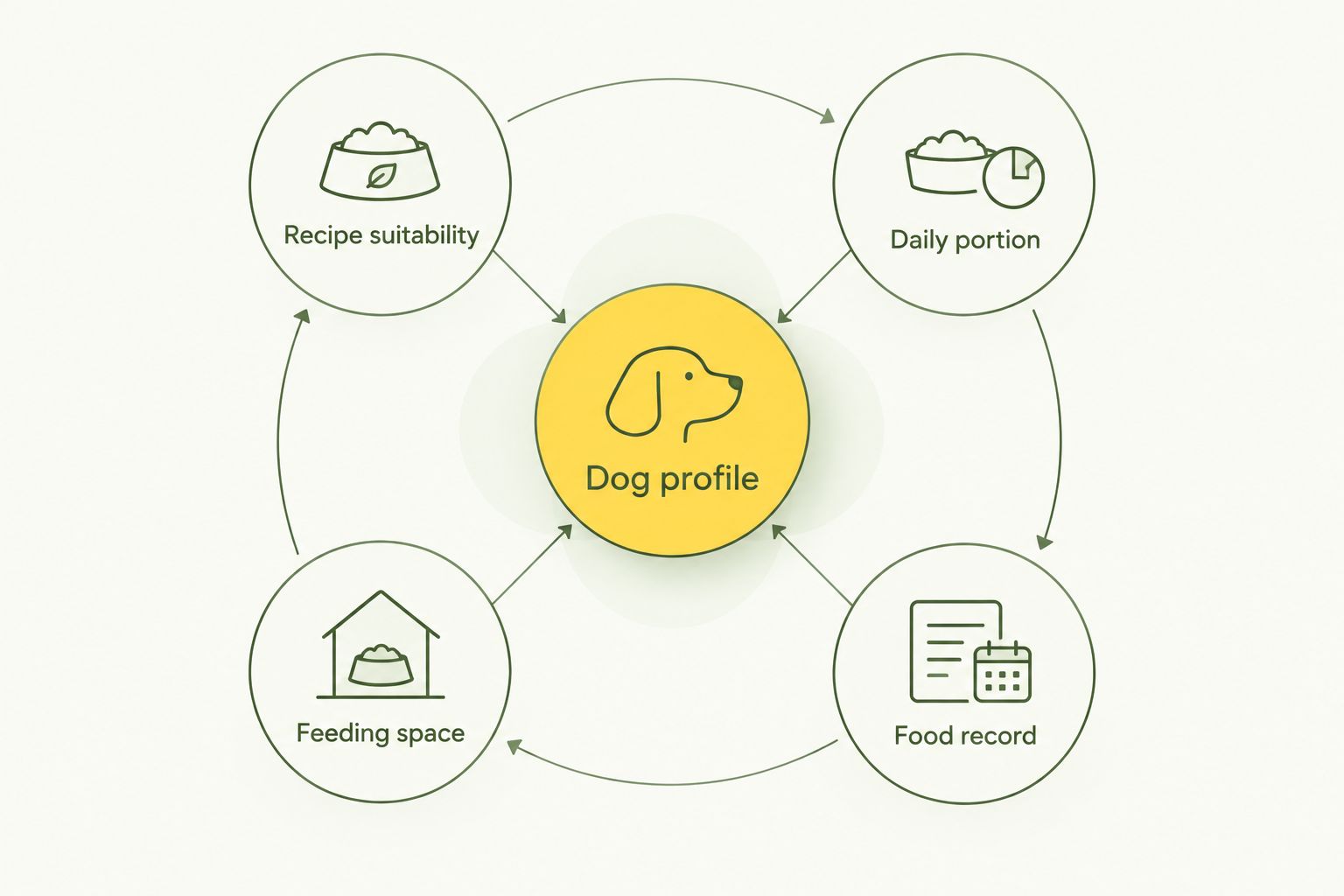
Keep these headings in your feeding record:
- Dog profile: life stage, weight and relevant dietary advice.
- Recipe suitability: complete status, ingredients and intended life stage.
- Daily portion: the amount recommended for that individual dog.
- Feeding space: where that dog eats without competition.
- Food record: what was served and what was left.
2. Check nutritional suitability before comparing boxes
Read the label yourself before choosing a brand or flavour. A food labelled complete is intended to supply the required nutrients when fed as directed for its stated life stage; complementary food is not intended to be the sole diet.
Do not treat an ingredient ratio as proof of nutritional completeness. An 80:10:10 description identifies proportions, not whether a recipe meets every nutrient requirement. Our guide to complete raw dog food explains the buying distinction.
For your 2026 shortlist, put suitability ahead of convenience. A shared recipe simplifies preparation only when it suits every dog receiving it. Otherwise, keep separate meals and combine the ordering process instead.
- Check the complete or complementary statement on the label.
- Match the food to each dog's life stage.
- Read the full ingredient list, including secondary proteins.
- Follow specific veterinary advice over a household feeding preference.
- Keep unsuitable recipes out of that dog's allocated freezer space.
3. Compare value against the meals you will actually use
Start manually: total each dog's planned daily food amount, then match that total to the pack weights you are considering. Compare value against usable food, not the size of the outer box. A mixed box loses its practical advantage if some recipes cannot be served.
Raw Direct's free next-day UK delivery makes a combined order convenient. The trade-off is that you still need room for the delivery and a clear allocation for every recipe. Delivery speed does not make an unsuitable mixed box a better choice.
The listed K9 boxes contain 454g blocks. A block is a pack format, not a universal meal size: weigh the required portion rather than assigning a whole block to each dog.
- Add together individual daily portions before planning an order.
- Compare total food weight, not box names alone.
- Count only recipes your intended dogs can eat.
- Include unused food and handling effort in your value judgement.
- Check current pricing and delivery terms before checkout.
4. Allocate freezer space before ordering
Measure your available storage using the food already in your freezer. Packaging shape matters alongside weight: rolls, blocks and trays occupy space differently. Leave room to keep recipes identifiable rather than squeezing everything into an unlabelled pile.
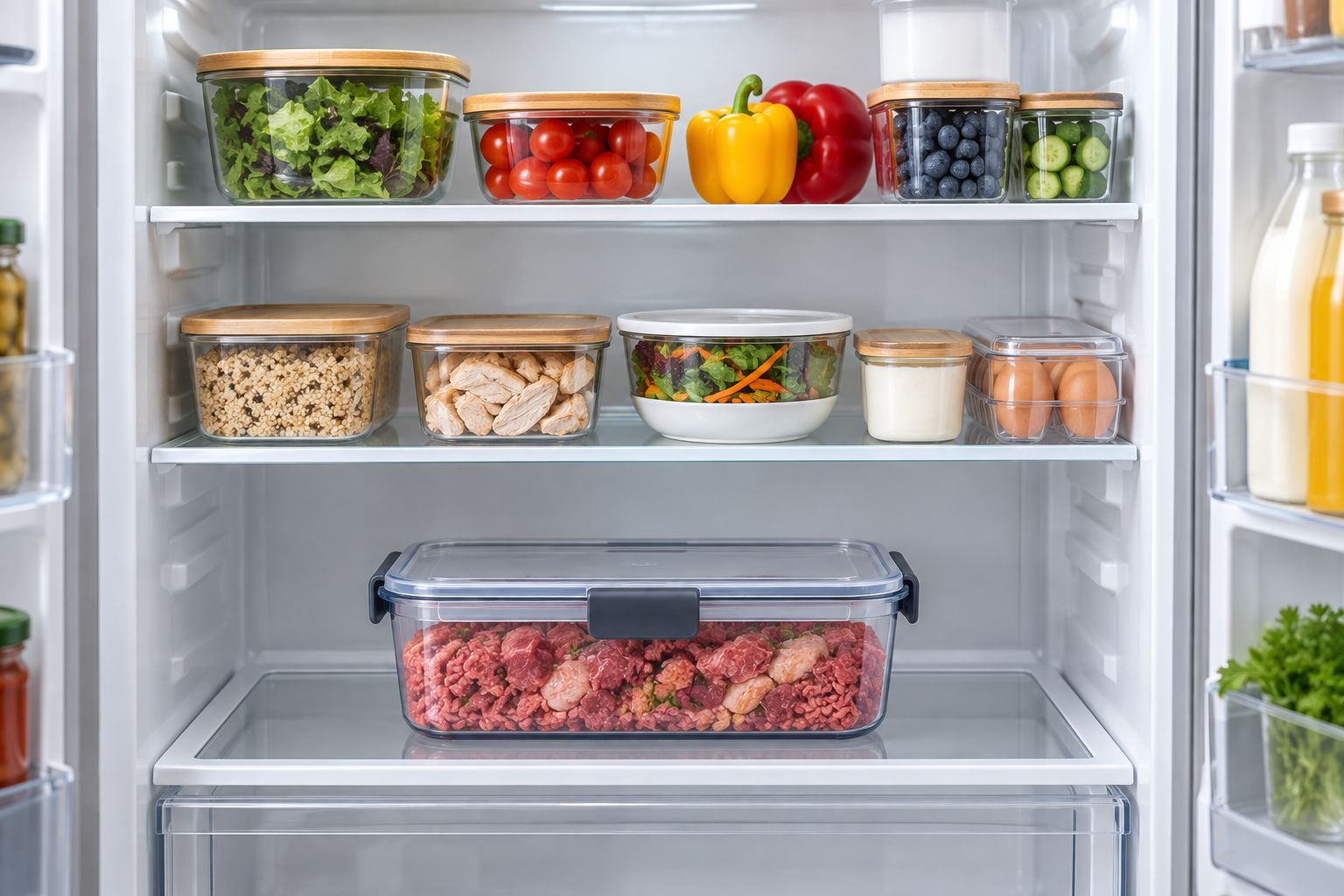
For a 2026 household routine, use a freezer operating at -18°C or colder and keep your fridge at 5°C or below, consistent with UK food-safety guidance. Follow each manufacturer's instructions for storage and thawing. Keep thawing raw food in a covered, leakproof container away from food eaten without further cooking.
Put a simple storage system in place:
- Assign a freezer section to restricted-diet food.
- Keep original ingredient and batch information with the food.
- Move older suitable packs to the front.
- Thaw in the fridge, not on the kitchen counter.
- Keep raw food below ready-to-eat food to prevent drips.
5. Prepare individual portions and feed dogs separately
Use kitchen scales and dedicated bowls to prepare each dog's portion. Record the amount served before feeding, especially when different people share the job. A weighed portion gives you a clearer record than an estimated scoop.
Feed dogs in separate spaces and supervise them. Finishing first should not give one dog access to another dog's bowl. Where dogs guard food, use physical separation and seek qualified behaviour support rather than testing whether they will share.
Raw feeding requires hygiene throughout preparation, not just after the bowls are empty. Raw food and contaminated utensils can spread bacteria to people and other animals.
- Weigh each portion into its own bowl.
- Keep dogs apart until all bowls have been collected.
- Wash hands after handling raw food or feeding equipment.
- Clean bowls, utensils and preparation surfaces thoroughly.
- Follow the label's instructions for leftovers and opened packs.
6. Change food without losing track of individual responses
Write down your starting routine before introducing a new food. Record each dog's appetite, stools, portion and recipe so you can identify which dog needs attention. Changing several recipes at once makes that record harder to interpret.
Agree a suitable transition with your vet when a dog has health concerns. Puppies and dogs receiving medical treatment need individual guidance rather than a household timetable. Vomiting, persistent diarrhoea, lethargy or refusal to eat warrants veterinary advice—not another flavour change.
Keep your transition process simple:
- Make a separate plan for each dog.
- Record the exact recipe being introduced.
- Avoid unnecessary simultaneous changes to treats and supplements.
- Note appetite and stool changes by dog.
- Seek veterinary advice promptly when a dog becomes unwell.
7. Reorder from measured use, not memory
Count the food remaining by recipe, then compare it with your recorded daily use. Total household consumption tells you when to reorder; recipe-level consumption tells you what to reorder. Both matter when one dog needs a separate diet.
Review your 2026 routine whenever your household changes. A new dog, different activity level or revised feeding guidance changes consumption even when your usual box stays the same.
Use one shared record so another household member can prepare the right meals without guessing. A useful feeding plan should work when the usual feeder is away.
- Record remaining food by recipe and pack weight.
- Subtract meals already allocated for thawing.
- Recheck portions when feeding advice changes.
- Order only what your storage can accommodate.
- Leave clear feeding instructions for other household members.
Compare feeding options for your household
Complete meals suitable for each dog are the strongest starting point. Mixed boxes win on variety; separate recipes win on ingredient control. Neither approach removes the need to check labels and feed individual portions.
This 2026 comparison focuses on suitability and handling rather than hard-coded prices. Check current pricing against the total food weight and recipes you will use.
| Option | Best for | Main advantage | Key limitation |
|---|---|---|---|
| K9 Raw Mixed Flavour Box 454g Blocks | Households whose dogs can eat the included recipes | Combines recipe variety in one box; described as complete raw food | Requires checking every included recipe against each dog's needs |
| K9 Raw No Chicken Box 454g Blocks | Households specifically excluding chicken | Described as a complete raw diet using alternative proteins without chicken | Chicken-free does not mean free from every other unwanted ingredient |
| Separate complete recipes | Dogs with different ingredient or life-stage requirements | Lets you allocate food individually | Creates more labels, storage sections and preparation decisions |
| Home-prepared raw meals | Owners working with a qualified veterinary nutritionist | Allows a professionally designed individual formulation | Requires nutritional formulation and careful preparation; guesswork is not sufficient |
The mixed box is the practical winner for variety only when every included recipe is suitable for its intended dog. The chicken-free box is the clearer choice when chicken exclusion is the specific requirement; it is not a treatment for suspected food allergy.
Separate complete recipes are the better organisational choice when your dogs' requirements differ. Home-prepared feeding needs professional formulation, not a larger shopping list of meat and organs.


Common mistakes multi-dog households make
- Buying for the least restricted dog. A variety box that suits one dog can contain unsuitable ingredients for another. Allocate recipes before ordering, not after opening the delivery.
- Treating pack size as portion size. A 454g block is packaging, not feeding advice. Weigh portions according to the individual dog's feeding plan.
- Letting dogs swap bowls. Bowl stealing changes both intake and ingredient exposure. Separate feeding spaces make your records meaningful.
- Using variety to compensate for an incomplete diet. More proteins do not automatically supply every required nutrient. Check nutritional suitability rather than counting flavours.
- Ordering beyond usable storage. A large delivery is inconvenient if you cannot keep it safely frozen and identifiable. Check capacity before choosing your order size.
FAQ
What's the best raw dog food for multiple dogs?
The best raw dog food for multiple dogs is complete food suitable for each dog's life stage and dietary needs. A shared recipe works only when it suits every dog receiving it; otherwise, use separate recipes within one household order.
Can all my dogs eat the same raw food?
Your dogs can eat the same raw food only if that recipe suits each dog's individual requirements. Feed separate measured portions, and check life-stage suitability and dietary restrictions before sharing a recipe.
Is a mixed raw food box better than separate recipes?
A mixed box is better for variety when your dogs can eat the included recipes; separate recipes are better for ingredient control. Check every recipe rather than assuming a box-level description answers each dog's needs.
How do I compare the value of raw food for several dogs?
Compare current pricing against the total weight of food your dogs can actually use. Include unsuitable recipes, wasted leftovers and preparation effort in your decision rather than judging value by box size alone.
How should I store raw dog food for a multi-dog household?
Keep raw dog food frozen according to its label and thaw it in a covered, leakproof container in the fridge. Keep your freezer at -18°C or colder and your fridge at 5°C or below, and separate raw food from ready-to-eat household food.
Does chicken-free raw food solve a dog's food allergy?
Chicken-free raw food does not diagnose or treat a food allergy. Ask your vet about suspected allergies and follow the recommended diet; other proteins and ingredients still need checking.
Is raw feeding safe around children or vulnerable adults?
Raw feeding introduces bacterial exposure risks, including through food, bowls and contaminated surfaces. If your household includes young children, pregnant people or immunocompromised people, discuss the feeding choice with your vet and relevant healthcare professional.
Why use Raw Direct for a multi-dog food order?
Raw Direct brings raw dog food from multiple brands into one retailer and offers free next-day UK delivery. You still need to check each recipe's suitability and make sure your household can store the order safely.
One last thing
Standardise the handling, not the dogs. One preparation area, one shared feeding record and a consistent cleaning routine can simplify the household without forcing every dog onto the same recipe. Start with individual suitability; make the ordering convenient afterwards.