
Can dogs eat raw chicken safely?
Dogs can eat raw chicken, but raw chicken is not a risk-free choice: it can carry Salmonella and Campylobacter, and bones add choking, tooth damage and blockage risks. Plain chicken meat also cannot provide a complete diet on its own. For your 2026 feeding plan, choose a complete food appropriate for your dog's life stage; cooked, boneless, unseasoned chicken is the safer option when you simply want to offer chicken.
- Can dogs eat raw chicken safely? Raw chicken carries bacterial risks; cooking reduces those risks.
- Plain chicken is not a complete dog food, whether you serve it raw or cooked.
- Raw chicken bones can cause choking, tooth damage and digestive injuries; cooked bones are unsafe too.
- Raw Direct offers chicken-free raw dog food, but removing chicken does not remove raw-food bacterial risks.
Can dogs eat raw chicken safely?
Eating raw chicken without an obvious problem does not prove that raw chicken is safe. Dogs can become ill from bacteria in raw poultry, and dogs without symptoms can still shed harmful bacteria in their faeces. That matters for anyone handling the food, cleaning the bowl or picking up after the dog.
Storage is part of that decision, not an afterthought. Read the guide to how long raw dog food can stay in the fridge alongside the manufacturer's instructions.
| Chicken option | Best for | Main advantage | Main limitation |
|---|---|---|---|
| Cooked, boneless, unseasoned chicken | Owners offering an occasional chicken extra | Thorough cooking reduces bacterial risk | Chicken alone is not a complete diet |
| Complete cooked chicken-based dog food | Owners wanting chicken as an everyday food | Combines a cooked format with complete feeding instructions | You still need the right life-stage food and portion |
| Commercial raw chicken dog food labelled complete | Owners already choosing raw after discussing the risks | Provides a formulated option rather than plain meat alone | Raw-food bacterial risks remain; check nutritional suitability |
| Plain raw chicken meat | No recommended everyday feeding use | Supplies animal protein | Not nutritionally complete and can carry harmful bacteria |
| Whole chicken bones | No recommended safety-first use | Provides something to chew | Can cause choking, damaged teeth or internal injury |
This comparison separates two questions that often get mixed together: whether chicken supplies nutrients and whether the food is safe to handle and feed. A food can contain useful nutrients and still carry bacteria. Likewise, cooking plain chicken improves microbiological safety without turning it into a balanced meal.
Why this matters
Your dog's bowl is part of your household's food environment. Raw poultry juices can reach hands, worktops, fridge shelves and utensils, while a dog carrying bacteria can spread them beyond the feeding area.
The Food Standards Agency's raw pet food guidance covers these handling and household risks. Veterinary organisations, including the World Small Animal Veterinary Association, also highlight infection and nutritional concerns associated with raw meat-based diets. These are reasons to make a deliberate feeding choice, not reasons to panic after an accidental mouthful.
For a safety-first choice in 2026, a complete cooked food wins over raw chicken. Be especially cautious where young children, older adults, pregnant people or people with weakened immune systems share the home. Good cleaning reduces exposure, but it does not make raw poultry sterile.
Plain chicken versus a complete chicken meal
A chicken breast, thigh or packet of mince is an ingredient, not a complete feeding plan. Meat alone does not supply the full balance of vitamins, minerals and other nutrients your dog needs over time. Adding bones or offal without a properly formulated recipe does not reliably solve that problem.
Look for a food labelled complete for the relevant life stage. Then check its feeding instructions, ingredients and the manufacturer's nutritional information. A puppy's requirements differ from an adult dog's, so an adult maintenance food is not automatically suitable for growth.
Recipe ratios are another source of confusion. A meat, bone and offal ratio describes ingredients; it does not, by itself, demonstrate that every required nutrient is present in the right amount. Treat a ratio as recipe information rather than a nutritional guarantee.
If you want to prepare your dog's entire diet at home, get a recipe formulated by a veterinary nutrition specialist. Do not build an everyday diet around chicken and internet portion rules. The right question is whether the whole diet is complete, not whether one ingredient looks wholesome.
Why raw chicken risk varies
Raw chicken risk depends on more than the cut of meat. These factors change the decision:
- Bacterial contamination: raw poultry can carry harmful bacteria even when it looks and smells normal. You cannot confirm safety by appearance.
- Storage and thawing: interrupted chilling and thawing on a worktop create opportunities for bacteria to multiply. Follow the pack's instructions.
- Bone content: a whole wing, neck or carcass introduces mechanical risks that a boneless piece does not. Grinding changes the shape, not the bacterial risk.
- Your dog's health: illness, weakened immunity and other medical conditions require an individual feeding discussion with your vet.
- Household vulnerability: a dog's lack of symptoms does not protect a vulnerable person from exposure through food handling or faeces.
- The rest of the diet: plain chicken, a complementary product and a complete food serve different purposes. Confusing them creates nutritional problems.
None of these factors provides a shortcut to guaranteed safety. Buying from a pet-food retailer, freezing the food or choosing a familiar protein does not remove the need to assess the risks.
How do you handle raw chicken if you already feed it?
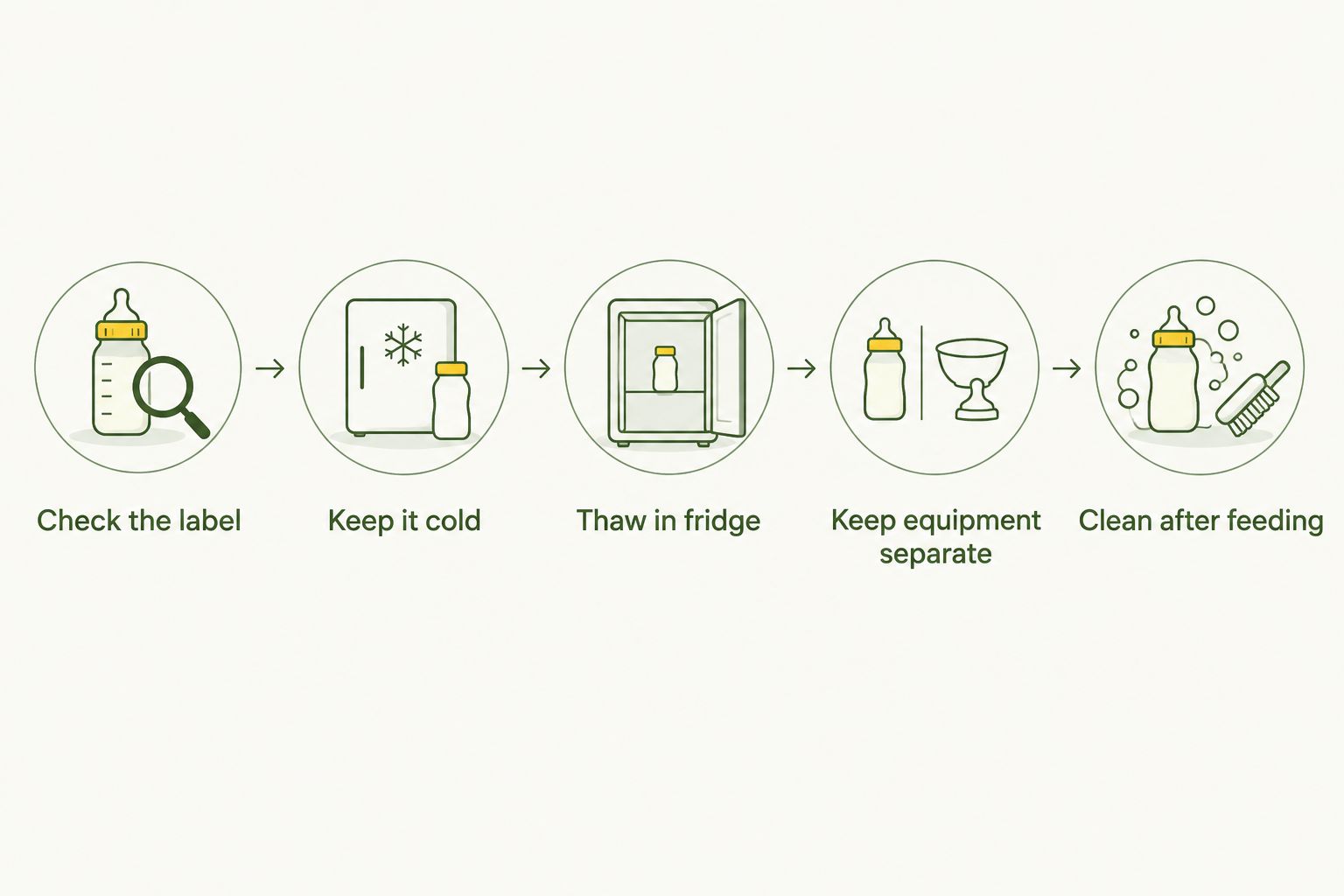
If you continue raw feeding in 2026, use a routine that separates raw pet food from food prepared for people. These steps reduce contamination; they do not eliminate it.
- Check the label. Confirm whether the food is complete or complementary, which life stage it suits and how the manufacturer says to store and serve it.
- Keep it cold. The Food Standards Agency advises keeping a fridge at 5°C or below and a freezer at around −18°C. Follow any stricter product instructions and keep raw food in a sealed container away from ready-to-eat food.
- Thaw in the fridge. Put the pack in a leakproof container, rather than leaving it on a kitchen worktop. Follow the manufacturer's thawing and use instructions.
- Keep equipment separate. Use dedicated pet-food utensils and prevent raw juices from reaching chopping boards, sinks or surfaces used for human meals. Do not wash raw chicken: splashes spread contamination.
- Clean after feeding. Wash the bowl and utensils, clean contaminated surfaces, and wash your hands with soap and water for 20 seconds, following NHS handwashing advice. Pick up faeces promptly and wash your hands afterwards.
The sequence matters because cleaning starts before you open the pack. Set aside the container and utensils first, so you do not touch cupboards, taps and other kitchen items with contaminated hands.
Keep children away from raw-food preparation and the feeding bowl. Avoid letting your dog lick faces immediately after eating, particularly where someone is vulnerable to infection. Dispose of leftover food according to the manufacturer's instructions rather than leaving it accessible for grazing.
Freezing is storage, not sterilisation. Harmful bacteria can survive freezing and remain a concern after thawing. A frozen pack therefore needs the same careful handling as other raw poultry.
Which chicken-related products fit your feeding decision?
Raw Direct's raw dog food range includes multiple brands, with free next-day UK delivery. Compare the full ingredients, nutritional suitability and feeding instructions before choosing a recipe; delivery convenience does not change the safety considerations.
Raw Direct is best for dog owners comparing raw dog food from multiple brands. Its retail range gives you a place to compare chicken-containing and chicken-free recipes, but raw products still require freezer space, careful handling and an informed feeding decision.
The following options illustrate that distinction. They are not recommendations to start raw feeding, and neither replaces a veterinary assessment of suspected food allergy.
| Product | Best for | Relevant detail | Honest trade-off |
|---|---|---|---|
| Supreme Chicken Free Allergy Box | Existing raw feeders who need to avoid chicken | The supplied product description states that none of its recipes contains chicken in any form | Removing chicken does not remove bacterial risks or establish an allergy diagnosis |
| Supreme Chicken & Apple Complete | Existing raw feeders whose dogs tolerate chicken | The supplied description lists chicken and apple in 454g rolls | Contains chicken; its recipe ratio alone does not establish suitability for every dog |
Supreme Chicken & Apple Complete uses an 80/10/5/5 recipe ratio. Check the manufacturer's full nutritional statement rather than assuming the ratio answers every question about completeness, growth or medical suitability.
For a dog with suspected chicken sensitivity, confirm the feeding plan with your vet before choosing a mixed box. Other animal proteins, treats and flavoured medicines can matter during a supervised diet trial, even when the main meal excludes chicken.


Can dogs eat raw chicken bones safely?
Raw chicken bones are not a safe default chew. They can cause choking, damaged teeth, obstruction or injury to the digestive tract. Cooked chicken bones are unsafe too, and cooking a bone does not make it suitable to feed.
Supervision helps you notice trouble, but it cannot prevent every injury. Avoid treating a dog's previous success with bones as proof that the next bone is safe. Ask your vet about suitable chewing options for your dog's size, teeth and chewing behaviour.
Does freezing raw chicken make it safe for dogs?
Freezing raw chicken does not reliably eliminate harmful bacteria. It preserves food for storage, but bacteria can survive and remain present once the chicken thaws.
For your 2026 storage routine, keep frozen food frozen until you are ready to thaw it as instructed. Do not use a longer freezing period as a substitute for hygienic preparation or as evidence that a batch is pathogen-free.
What should I do if my dog has eaten raw chicken?
Remove any remaining chicken and check whether bones, packaging or seasoning were swallowed. Keep the packaging or ingredient information, and contact your vet for advice if the amount was substantial, bones were involved, your dog has an existing health condition or symptoms develop.
Do not induce vomiting unless your vet instructs you to. Get urgent veterinary help for choking, breathing difficulty, collapse, repeated vomiting, bloody diarrhoea, a painful abdomen or marked lethargy. A dog that seems well immediately after eating still needs observation; there is no universal symptom-free window that guarantees everything is fine.
FAQ
Can dogs eat raw chicken safely every day?
Raw chicken is not a risk-free everyday food, and plain chicken alone is not nutritionally complete. Choose a complete diet appropriate for your dog's life stage and discuss raw feeding with your vet.
Is cooked chicken better than raw chicken for dogs?
Cooked, boneless, unseasoned chicken is the safer choice for an occasional extra because thorough cooking reduces bacterial risk. Plain cooked chicken still does not replace a complete everyday diet.
Can puppies eat raw chicken?
Plain raw chicken is not an appropriate complete diet for puppies. Puppies need food suitable for growth, and raw poultry adds infection risks; ask your vet about a complete feeding plan.
Can dogs get Salmonella from raw chicken?
Dogs can become infected with Salmonella from contaminated raw chicken. Dogs without visible symptoms can also shed bacteria in their faeces, exposing people and other animals.
Is supermarket raw chicken safe for my dog?
Supermarket raw chicken is not guaranteed safe to feed uncooked. Poultry sold for people is intended to be handled hygienically and cooked, and plain meat does not provide a complete dog diet.
Does a chicken-free raw food avoid the risks of raw chicken?
Chicken-free raw food avoids chicken ingredients when the full formulation confirms that claim, but it does not remove raw-food bacterial risks. Other raw meats still need careful handling.
What temperature should I store raw dog food at?
Keep your fridge at 5°C or below and your freezer at around −18°C, following Food Standards Agency storage advice. Follow the product's specific storage, thawing and use instructions as well.
Can I cook a raw chicken dog food to make it safer?
Do not assume a raw dog food is suitable for cooking, particularly if it contains bone. Ask the manufacturer about the formulation or choose a food specifically made to be fed cooked.
One last thing
The most useful safety check is not whether your dog enjoys the chicken. It is whether the food suits your dog, supplies complete nutrition and fits a handling routine that protects your household.
Before placing your next Raw Direct order in 2026, read the full label and decide what problem you are solving: everyday nutrition, avoiding a confirmed ingredient or adding an occasional extra. Changing the protein and changing the food's safety are different decisions.